Strategic Clarity
A Structured Diagnostic for Market Structure Transition
Periods of structural change alter how capital, infrastructure, and institutions operate.
Before committing capital, launching products, entering new markets, or repositioning strategy, organizations require clarity on how regulatory, operational, and market structures are evolving.
Strategic Clarity is a defined-scope advisory engagement designed to provide that clarity.
Why Strategic Clarity Exists
Structural transitions introduce:
- Regulatory ambiguity
- Operational complexity
- Competitive repositioning pressure
- Technology adoption risk
- Capital allocation uncertainty
Strategic Clarity exists to reduce decision error before strategic commitments are made.
What You Receive
Each engagement includes:
- Market structure and infrastructure assessment
- Regulatory trajectory analysis
- Governance and execution constraint evaluation
- Identification of structural risks and blind spots
- Formal advisory memorandum
- Executive-level briefing and discussion
This is not ongoing consulting.
It is a disciplined diagnostic engagement designed to support informed decision-making.
Ideal For
- Institutions evaluating structural change
- Operators managing regulatory and operational complexity
- Infrastructure providers assessing institutional integration requirements
- Leadership teams evaluating strategic positioning decisions
- Founders building institutional-facing infrastructure
Engagement Structure
- Defined scope
- Fixed duration
- Structured deliverable
- Executive-level presentation
Strategic Clarity is designed to provide informed perspective before irreversible decisions are made.
Methodology
Strategic Clarity is conducted through structured research, executive interviews where appropriate, and independent market structure analysis.
Each engagement culminates in a formal advisory memorandum and executive briefing.
This ensures recommendations are:
- Documented
- Defensible
- Actionable
Begin with Clarity
The objective is not simply understanding change.
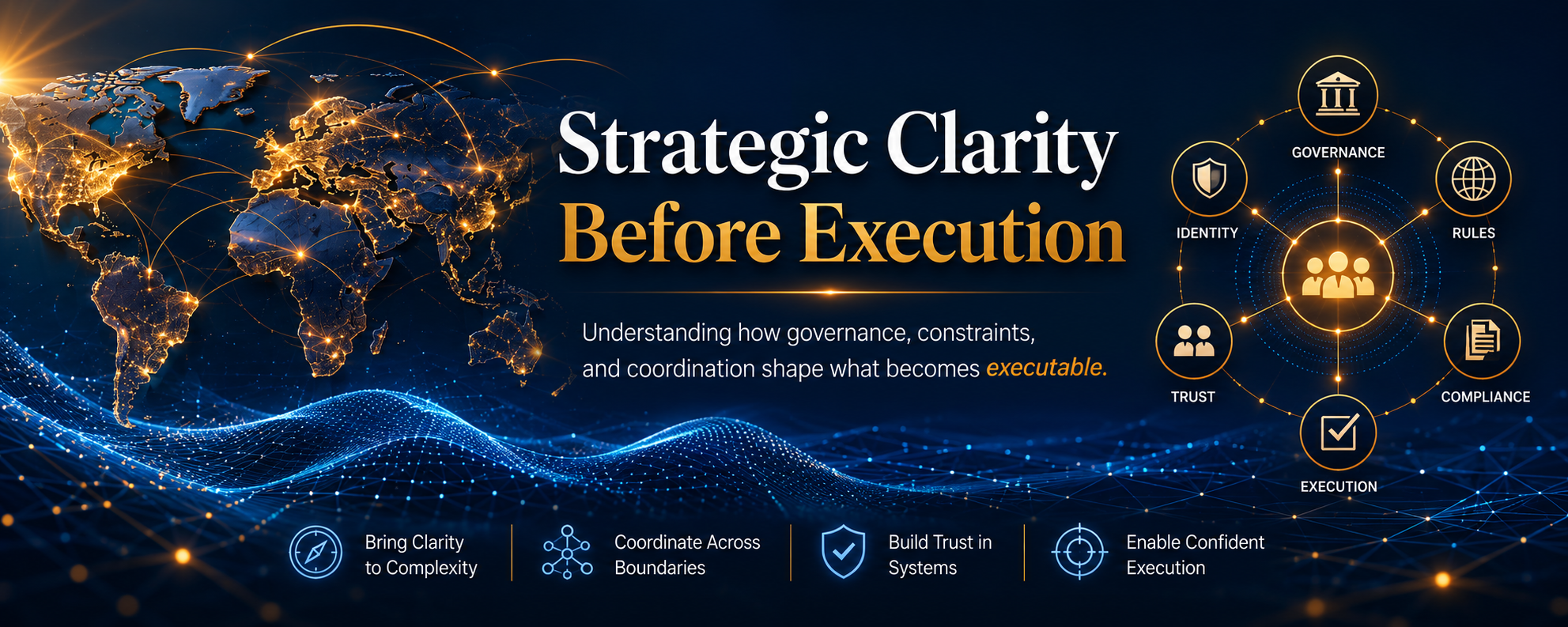
It is understanding how governance, regulation, operational constraints, and institutional coordination shape what becomes executable.
Initial discussions assess alignment, scope, and intitutional fit.


.PNG)